FIRST TIME
Feb 12, 2026, in Program „Short Not Short: Love and Corruption“ at Uppsala Art Museum
Kategorie: News
UPPSALA ART MUSEUM
LIKE HORSES 🐴🌧️ STUTTGARTER FILMWINTER
LIKE HORSES STANDING IN THE RAIN
Jan 17, 2026, 39th Stuttgarter Filmwinter – Festival for Expanded Media 14. – 21.01.2026
MERRX XMAS AMD A BRAVE NEW YEAR
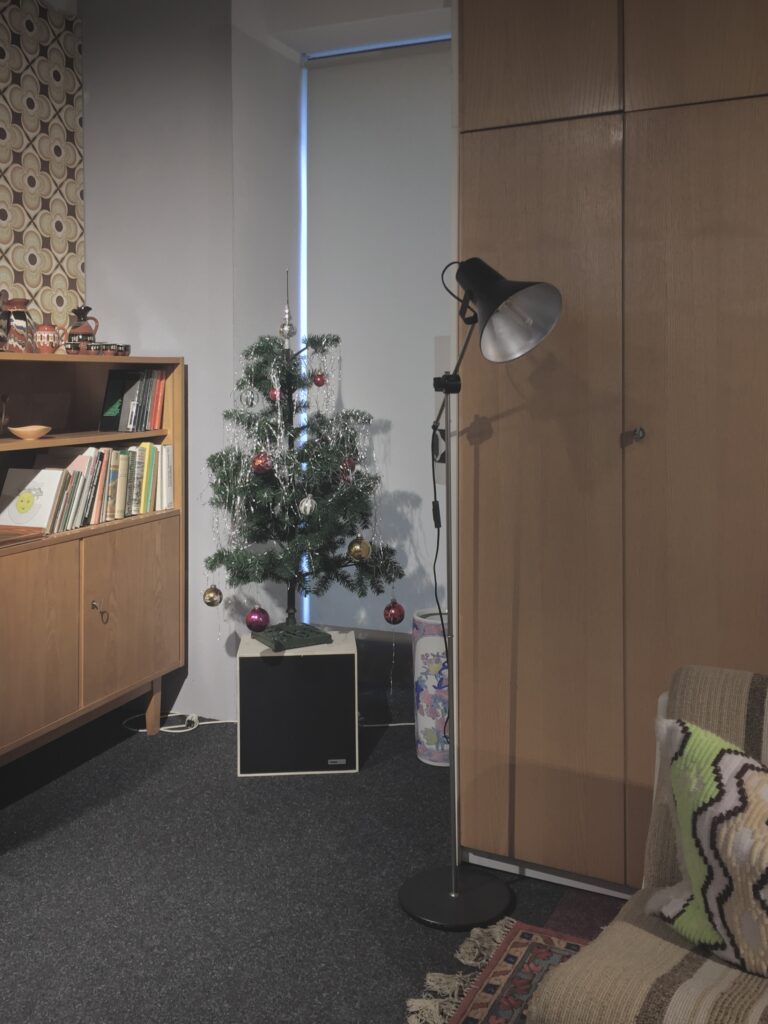
FILMHAUS NÜRNBERG
FINAL STAGE [The Time for All but Sunset – BGYOR]
Dec 21 Filmhaus Nürnberg
LIKE HORSES 🐴🌧️ RUSSIA TOUR
Moskow Nov 15, 7pm, Garage Museum https://garagemca.org/event/film-screening-misunderstanding-as-a-system
Kazan Nov 16, 2:30pm, Center of Contemporary Culture Smena https://s-m-e-n-a.org
Ekaterinburg Nov 30, 7pm, Dom Kino https://domkino-ekb.ru
Vladivostok Dec 14, Ussuri cinema https://illuzion.ru/cinema/ussuri
EXGROUND FILMFEST: Surprise Premiere
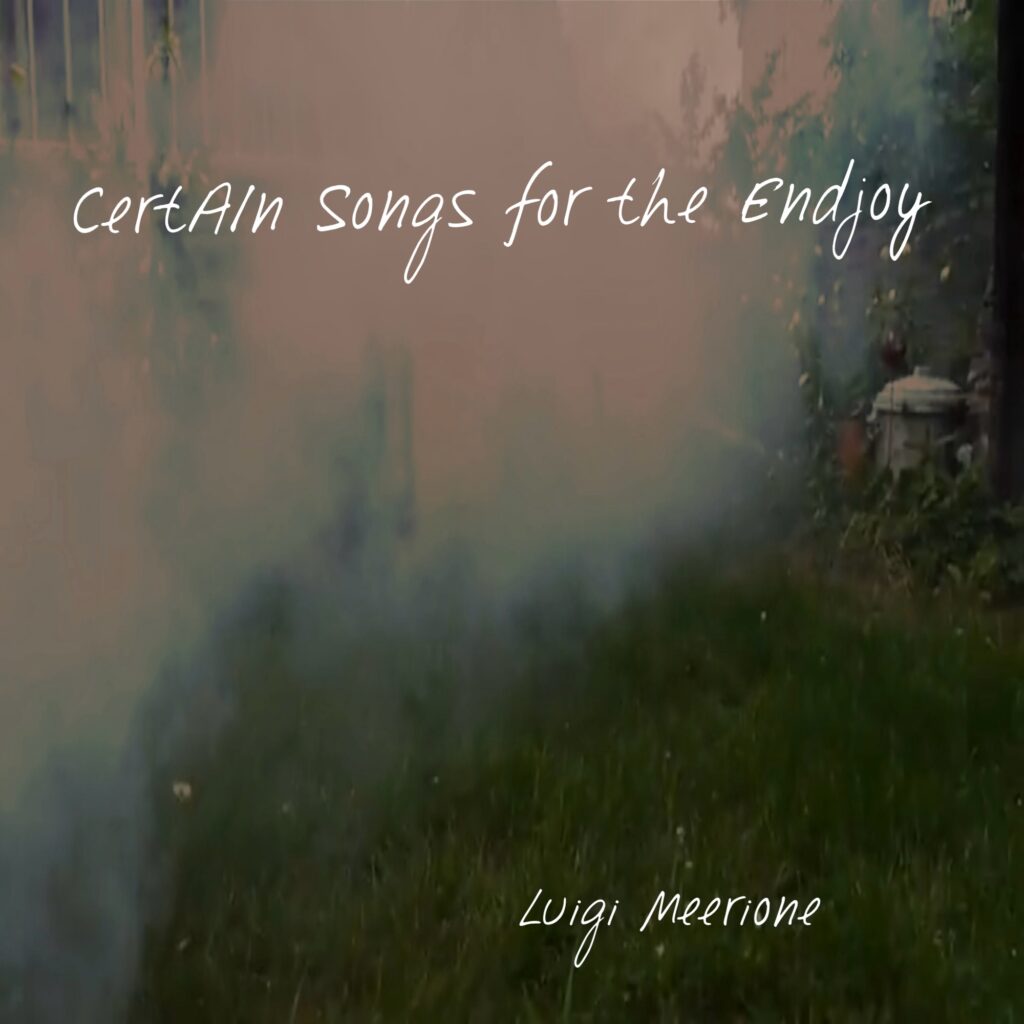
Nov 22, 2025 Music Video Premiere of first single from Luigi Meerione’s debut album at Exground Filmfest Wiesbaden
story concept / direction: Ray Juster & Nicolaas Schmidt
visual concept / montage: Nicolaas Schmidt
MILANO INSOLENTE SCREENING
FIRST TIME [The Time for All but Sunset – VIOLET]
Oct 30, 2025 9pm at Z.I.A. Zona Indipendente Artistica, in via Francesco De Sanctis 43, Milano.
Insolente è una sonora linguaccia nel momento meno opportuno.
Cinema fuori dal genere e dai generi.
Un’azione di prossimità collettiva.
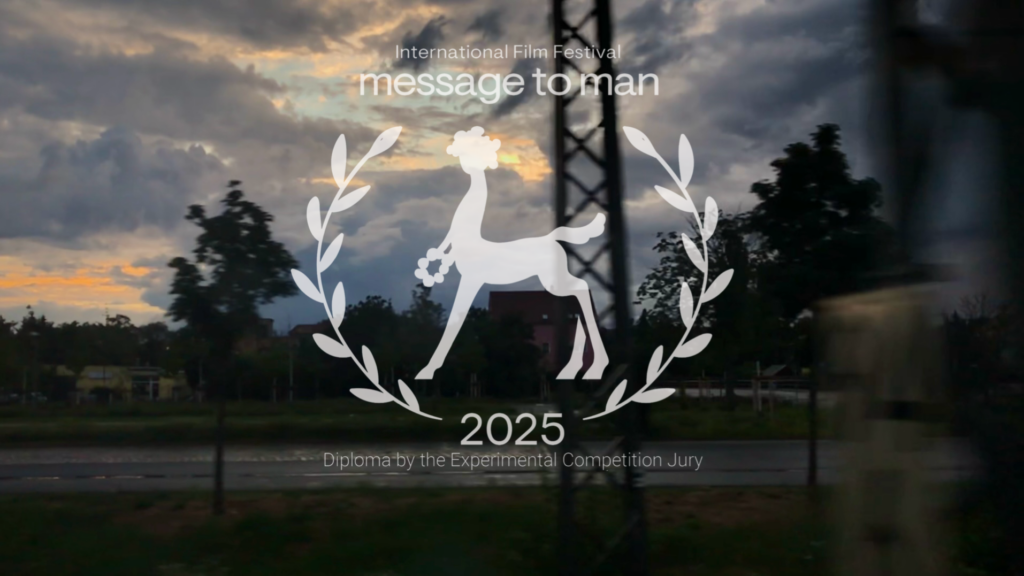
SAINT PETERSBURG Screening&Award
LIKE HORSES STANDING IN THE RAIN
Oct 19 and 21, each at 9pm (Moscow time), Rodina cinema (Karavannaya Ulitsa, 12), 35th Message to Man International Film Festival, Saint Petersburg (Oct 17-25, 2025)
HINTERCONTI HAMBURG
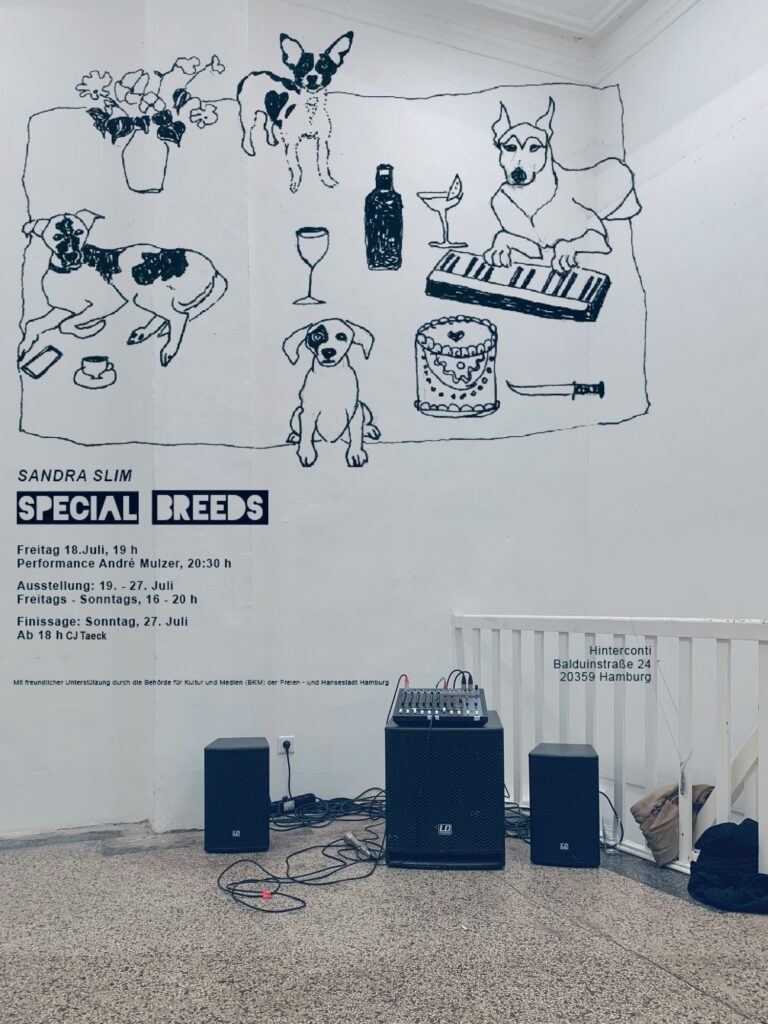
Jul 27, 2025 Finissage „Speciel Breeds“ by Sandra Slim, Hinterconti St. Pauli Hamburg
6pm: Chilly Loops with CJ Taeck
SEPTEMBER’S COMING SOON
Financing closed for production of SEPTEMBER AFTERNOON, thanks to film funding by Moin and FFA.
„A last summer day as stage of a failed illusion of eternal harmony, hope, endurance, resilience.
A post postmodern persistence parable.“
KINO KOKI LÜBECK
INFLORESCENCE & FIRST TIME [The Time for All but Sunset – VIOLET]
Jul 7, Kino Koki, Lübeck
Screening&Talk with Anne Döring and Martin Rehbock: Wie kann Filmkunst politisch sein?
BEST OF CINEMANICA #1
FIRST TIME [The Time for All but Sunset – VIOLET]
Apr 26 3pm, Coocine, Medellin, Colombia
FILMFEST DRESDEN
LIKE HORSES STANDING IN THE RAIN
at Dresden Film Festival Apr 8-12 2025
National Competition 1:
Di, 08.04.25, 9:30pm Schauburg
Mi, 09.04.25, 8:15pm Programmkino Ost
Do, 10.04.25, 8:00pm Zentralkino
Fr, 11.04.25, 10:00pm Schauburg
Sa, 12.04.25, 10:00pm Schauburg
MERRY XMAS AND A SOBER NEW YEAR

FITZ THEATER STUTTGART
Shorties Filmprogramm u.a. mit INFLORESCENCE +
LIKE HORSES STANDING IN THE RAIN
Dienstag, 03.12.2024, 19:30 Uhr
FITZ Theater Stuttgart
KASSELER 🐴🎄🌧 DOKFEST
LIKE HORSES STANDING IN THE RAIN
at 41st Kassel Documentary Film and Video Festival
Nov 14, 2024 10:15pm, BALi
OPENING FILMHAUS HFBK HAMBURG
Oct 16, 2024
5:30pm: Welcome and Discussion on the present and future of author film
HFBK Auditorium, Lerchenfeld 2
from 7 pm: Film Program in the Cinema of the new Film House, among others: INFLORESCENCE (Hamburg Cinema Premiere)
HFBK Film House, Finkenau 42
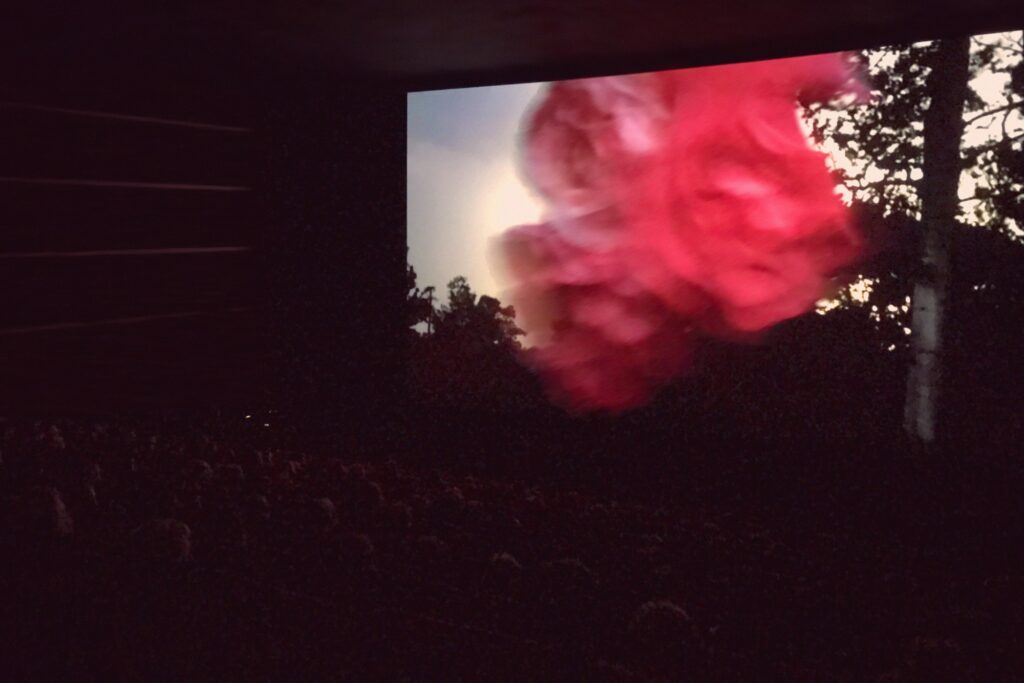
“Ich hatte das Glück diesen Film auf der Berlinale zu sehen auf einer gigantischen Leinwand. Es sind 8 Minuten, die schwer zu greifen sind wenn rechts eine email kommt und links das handy vibriert.
Wenn ihr könnt baut euch ein kleines #Kino und schaut euch es an.“
(Lennart P, Facebook Comment Mai 2020)
INFLORESCENCE AT BIEFF (again)
Sep 19-24, 2024, Bucharest International Experimental Film Festival:
INFLORESCENCE in curated program „Longing for political stability“
Sep 29, 2024 4pm, Cinema Union
„The last installment of the triangle program Longing for Stability is the program conceived by Oana Ghera for BIEFF, Gestures of Resistence. It proposes a militant approach, that focuses on short films about individual and collective protest movements and actions inspired by recent political events, the program’s optimistic corollary being that each gesture of resistance encapsulates the promise of a future revolution.“
INFLORESCENCE AT DOKUFEST PRIZREN
Aug 02-10, 2024, DokuFest Prizren, Kosova:
INFLORESCENCE in curated program „Longing for political stability“
CĂLIN BOTO for FILMS IN FRAME
The Light Images of Nicolaas Schmidt

Photo: Berlinale
Cinema knows that time means light: shootings are organized in way that allows the sun to be kind to them. And still, filmmakers have rarely used light as an object and subject to the same degree to which they used time – and if they indeed do so, then few noticed it. Here, at last, is Nicolaas Schmidt, whose films are precisely plays of light, or rather, plays of twilight – the so-called “golden hour” –, the double moment, of utmost importance, that lies in the immediacy of both sunrise and sunset: anything that happens in this diffuse light comes seems holy, decisive, since it’s the beginning ot it all – or the very end.
Schmidt hasn’t made many films – even so, a couple more than what I’ve managed to see so far. I easily went through his First Time, his only medium-length film, at Locarno in 2021: back then, I wondered by the jury, of whom Adina Pintilie was also a member, awarded it, but I have understood in the meantime. Because it happens that Inflorescence – with a rose and, lost in the background, a German flag swaying in the wind for around seven minutes, while in the background, a slowed-down version of Don’t Dream It’s Over – won the award for Best Filmmaker at BIEFF in the same year. Again on the big screen, Schmidt’s cinema seemed to bear an incredible visual self-conscience: a gaze that is simultaneously longing and suspicious towards the (im)possible naivete of all contemporary images.
„To be consumed lightly”, the filmmaker writes, since his cinema plies itself to the aesthetics of comfort: young people with angelic, Netflix-esque visages, Coca Cola commercials, constant twilight, karaoke and pop music. Once comfortable, the spectator will feel the shocking paradox of alienation brought upon by the extreme banality, of un-happening in Schmidt’s cinema: for the most part (that is, 40 out of its 50 minutes), First Time is a long single shot in which two unknown boys timidly share glances without having the courage to take the first step. The view beyond the window, which crosses tunnels, landscapes and lights, becomes the film’s major subject, while the spectators’ anxiety only grows and grows – briefly before moving into the train, a montage of Coca-Cola advertisements with uplifting mottos flashes on the screen. It’s quite clear that Schmidt’s boys are not only not having an uplifting experience, but are moreso embodying a contemporary neurosis of the masses: the impossibility of becoming a protagonist, the futility of striving for the close-up shot that a protagonist culture promises at every step.
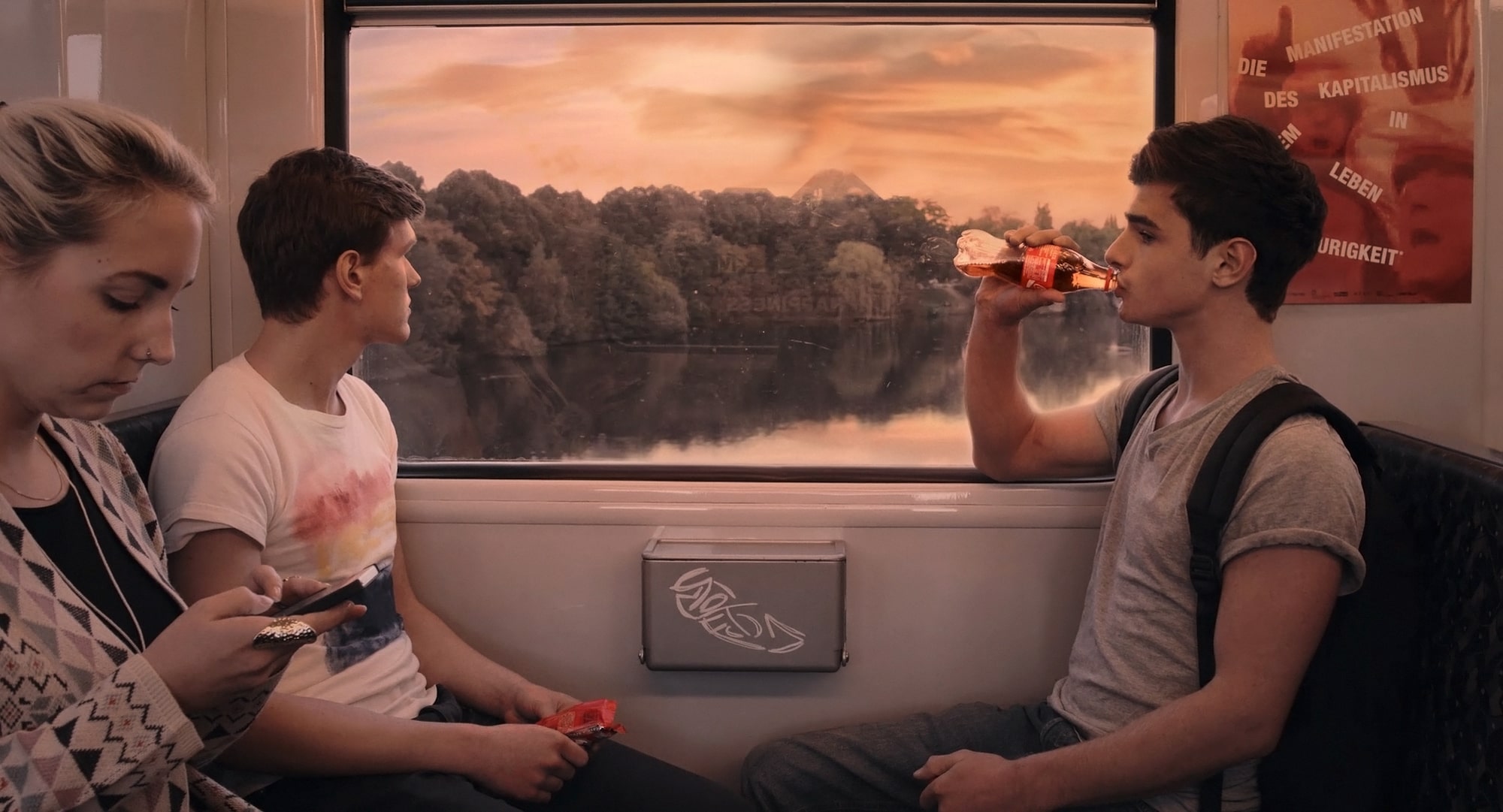
A few years ago, the same actors performed in another one of his short films, Final Stage (2017), a de-dramatized melodrama about a boy that gets angry at his boyfriend and cries all throughout a mall in Hamburg, the biggest in Europe, for the entire duration of an 11-minute-long single shot. Once more, the foreground is pointless, since the action happens in the background, amongst the shuffle of shopping bags, advertisements, restaurants that sell the traditional food of faraway, unknown lands: light images, anonymous, culturally naturalized to such a degree that they’re part of an unknown visual subconscious, one that, however, can be understood apriori – Schmidt’s view of this is clear, and his manner of showing it all the more so.
(Călin Boto)